Temperature
60–85°F
Keep away from winter window glass and heating vents.
Philodendron bipinnatifidum
Tree philodendron wants bright indirect light and water every 7 to 12 days, once the top two inches are dry. Toxic to cats, dogs, and humans.
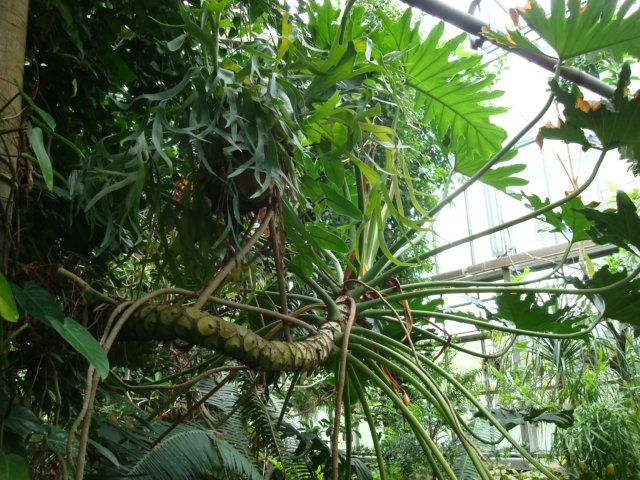
Contains insoluble calcium oxalates. Reported signs include oral irritation, intense burning of mouth and tongue, excessive drooling.
If a pet has chewed a leaf, rinse the mouth with water and call your vet or the ASPCA Animal Poison Control Center at (888) 426-4435.
Full detail for cats → Full detail for dogs →
Bright indirect light. An east window, or four feet back from a south one. It spreads sideways more than up, so give it floor space rather than height.
Every 7 to 12 days in a 6-inch pot, when the top two inches are dry.
Treat the interval as a starting point and the test as the actual instruction. Pot size, light level and season all move the number.
| Method | soak and dry |
|---|---|
| Test before watering | the top two inches are dry |
Two parts potting soil, one part perlite, one part orchid bark.
Repot roughly every 2 years, or when roots come through the drainage holes and water runs straight through without absorbing.
Ranked by how often each turns out to be the cause for this species. Each links to a diagnosis page with the causes ranked for this species.
Pest and disease guidance for this species consulted at the Missouri Botanical Garden Plant Finder, checked 2026-09-12.
Recorded for this species. Each links to identification and treatment.
Stem cutting in water or soil. Roots in 21 to 42 days.
A cutting without a node will not root. It may stay green in water for months and never produce a single root, because it has no growth point.
| Preferred method | stem cutting |
|---|---|
| Medium | water, soil |
| Time to root | 21–42 days |
| Node required | Yes |
| Best season | Spring and summer |
Compiled and edited by Tony Valcarcel · 2026-09-02
Tony Valcarcel is the editor and publisher of this database, not a horticulturist
or a veterinarian. Every fact above is drawn from the sources listed, and
toxicity severity is reported only where one of them stated it.
How this is sourced.
Last updated 2026-09-02
