Temperature
50–90°F
Keep away from winter window glass and heating vents.
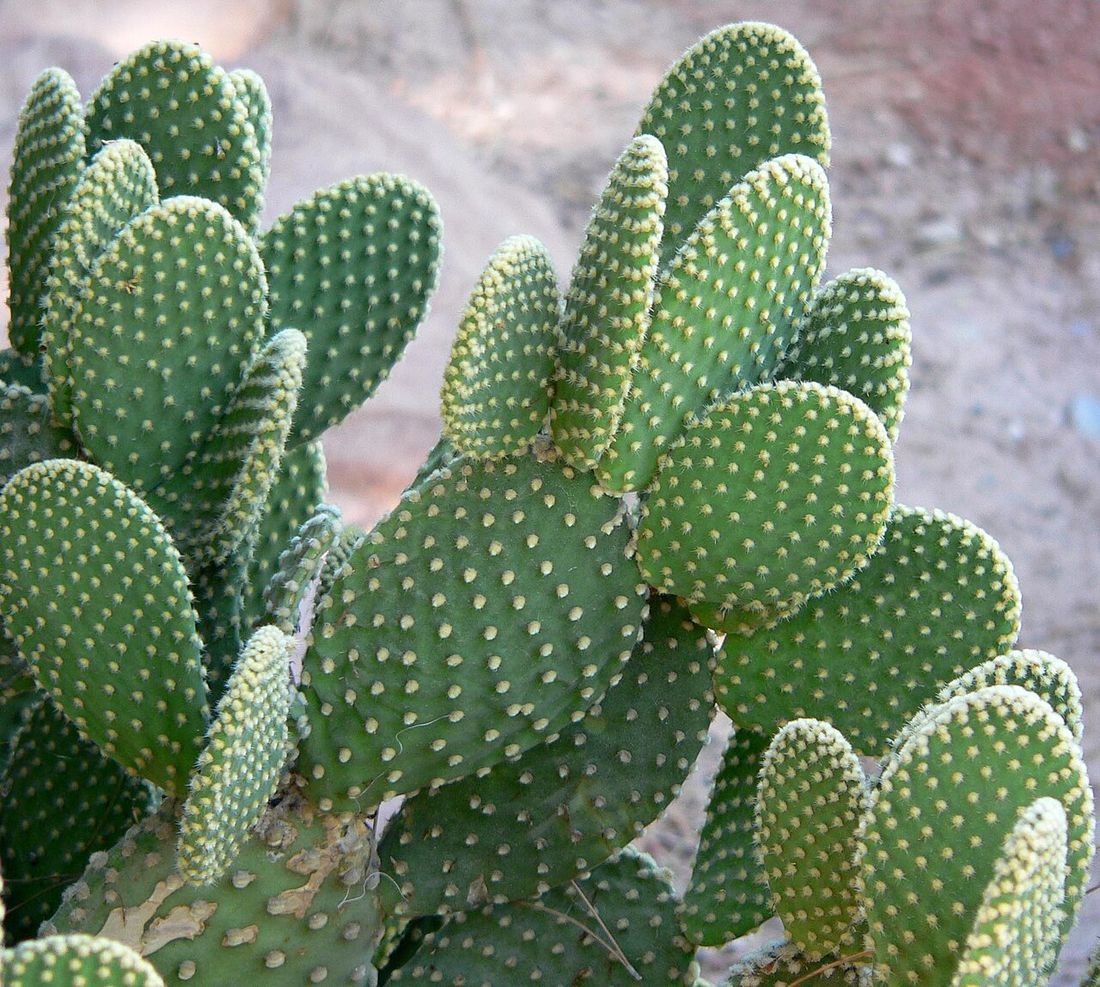
Opuntia microdasys
Bunny ears cactus wants direct light and water every 18 to 35 days, once the soil is dry all the way through and has been for a week. Non-toxic to cats and dogs.
Eating a large amount of any plant can still cause mild stomach upset.
Detail for cats → Detail for dogs →
Direct light. A south or west window against the glass. Full sun, and nothing indoors is too bright.
Every 18 to 35 days in a 6-inch pot, when the soil is dry all the way through and has been for a week.
Treat the interval as a starting point and the test as the actual instruction. Pot size, light level and season all move the number.
| Method | soak and dry |
|---|---|
| Test before watering | the soil is dry all the way through and has been for a week |
One part cactus mix, one part pumice or coarse grit.
Repot roughly every 4 years, or when roots come through the drainage holes and water runs straight through without absorbing.
Ranked by how often each turns out to be the cause for this species. Each links to a diagnosis page with the causes ranked for this species.
Recorded for this species. Each links to identification and treatment.
Stem cutting in soil. Roots in 21 to 56 days.
| Preferred method | stem cutting |
|---|---|
| Medium | soil |
| Time to root | 21–56 days |
| Node required | No |
| Best season | Spring and summer |
Compiled and edited by Tony Valcarcel · 2026-09-02
Tony Valcarcel is the editor and publisher of this database, not a horticulturist
or a veterinarian. Every fact above is drawn from the sources listed, and
toxicity severity is reported only where one of them stated it.
How this is sourced.
Last updated 2026-09-02
