ADULTPLANTS

Rabbit’s foot fern

Davallia fejeensis

Family Polypodiaceae Native to Fiji Habitat canopy epiphyte

Rabbit’s foot fern wants medium light and water every 4 to 9 days, once the surface is just dry to the touch. Non-toxic to cats and dogs.
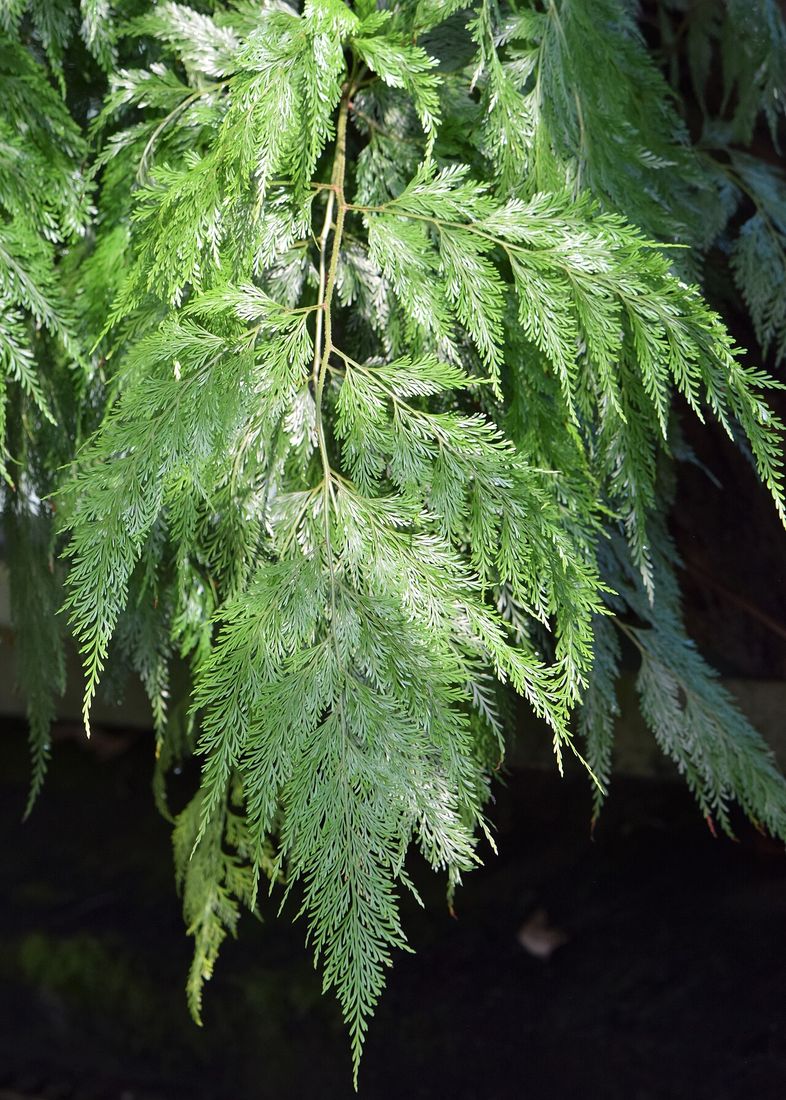
Rabbit’s foot fern (Davallia fejeensis)
Davallia fejeensis. Photograph by Krzysztof Ziarnek, Kenraiz, via Wikimedia Commons, CC BY-SA 4.0.
Light
Medium
LowMediumBright indirectDirect
A north window, or four feet back from an east one. Direct sun crisps the fine fronds quickly.
Water
Every 4–9 days
Baseline for a 6-inch pot indoors. Check first: water when the surface is just dry to the touch, not on a schedule.
Humidity
50% and up
Wants 65%. Struggles in dry winter air.
Temperature
60–80°F
Keep away from winter window glass and heating vents.
Difficulty
Moderate
Scores 3 of 5: Scores 3 of 5: the furry rhizomes that give it its name creep over the pot rim and must not be buried — burying them rots the plant, and it is the commonest mistake at repotting.
Habit
Spreading
Grows to 12–24 inches. No support needed.
Non-toxic to cats and dogs

Eating a large amount of any plant can still cause mild stomach upset.

Detail for cats → Detail for dogs →

What each authority says
ASPCA — genus-level entry: Davallia spp.
Non-toxic to cats and dogs
NC State Extension
Entry exists and records no poison data.

Light

Medium light. A north window, or four feet back from an east one. Direct sun crisps the fine fronds quickly.

Water

Every 4 to 9 days in a 6-inch pot, when the surface is just dry to the touch.

Treat the interval as a starting point and the test as the actual instruction. Pot size, light level and season all move the number.

Methodkeep evenly moist
Test before wateringthe surface is just dry to the touch

Soil and potting

Two parts orchid bark, one part peat-free potting soil, one part perlite.

Repot roughly every 2 years, or when roots come through the drainage holes and water runs straight through without absorbing.

Common problems

Ranked by how often each turns out to be the cause for this species. Each links to a diagnosis page with the causes ranked for this species.

Pest and disease guidance for this species consulted at the Missouri Botanical Garden Plant Finder, checked 2026-09-12.

Pests

Recorded for this species. Each links to identification and treatment.

Propagation

Division in soil or bark. Roots in 28 to 70 days.

Preferred methoddivision
Mediumsoil, bark
Time to root28–70 days
Node requiredNo
Best seasonSpring and summer

Full propagation guide for this species →

Sources

  1. ASPCA Animal Poison Control — Davallia spp. Checked 2026-09-12.
  2. North Carolina Extension Gardener Plant Toolbox — Davallia fejeensis (consulted; entry exists and records no poison data.) Checked 2026-09-12.
  3. Wikidata entity Q5228130 — taxonomy and entity identity.
  4. Royal Botanic Gardens Kew, Plants of the World Online — Davallia fejeensis Accepted name; family Polypodiaceae. Also placed in Davalliaceae in some classifications; Kew places it in Polypodiaceae. We follow Kew, which SKILL.md names as the taxonomy authority. Checked 2026-09-12.
  5. Missouri Botanical Garden Plant Finder — Davallia fejeensis Pest and disease guidance. Checked 2026-09-12.
  6. Photograph: Krzysztof Ziarnek, Kenraiz, Wikimedia Commons , CC BY-SA 4.0.

Compiled and edited by Tony Valcarcel · 2026-09-02
Tony Valcarcel is the editor and publisher of this database, not a horticulturist or a veterinarian. Every fact above is drawn from the sources listed, and toxicity severity is reported only where one of them stated it. How this is sourced.
Last updated 2026-09-02