Parlor palm vs Dragon tree
Chamaedorea elegans · Dracaena marginata
Pet safety: Parlor palm is listed non-toxic to cats and dogs; Dragon tree is toxic (saponins). If the two are sold under the same name, a mislabelled plant is a genuine risk in a house with animals.
Why these two get mixed up
Dragon tree is recorded here as a pet-safe alternative to Parlor palm, so the question is usually whether the swap is actually a fair one.


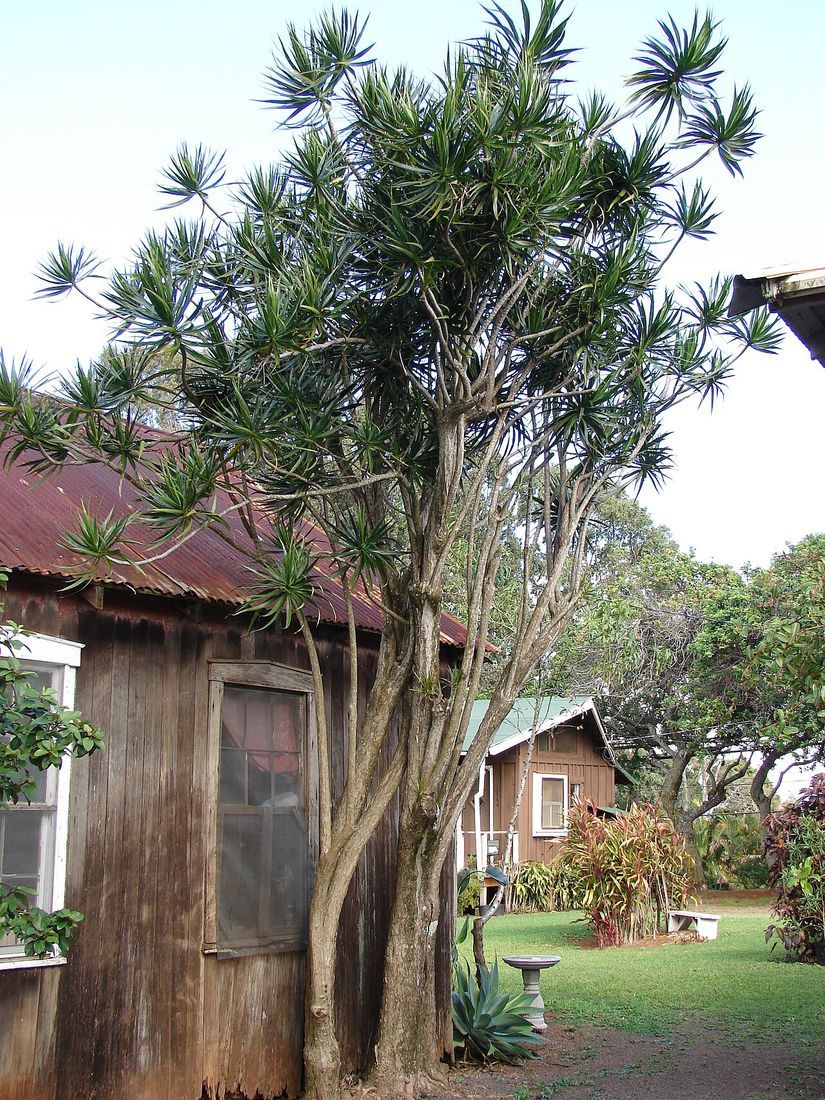

| Parlor palm | Dragon tree | |
|---|---|---|
| Scientific name | Chamaedorea elegans | Dracaena marginata |
| Family | Arecaceae | Asparagaceae |
| Light floor | Low | Low |
| Water | 7–10 days | 10–18 days |
| Humidity floor | 40% | 30% |
| Mature height | 24–48 in | 36–96 in |
| Habit | clumping | upright |
| Growth rate | slow | slow |
| Difficulty | Easy | Easy |
| Toxic to pets | No | Yes |
| Typical price | $20–50 | $25–80 |
Highlighted cells are where the two actually differ. Everything else they share.
The differences that matter
Pet safety
This is the difference that matters most. Parlor palm is listed non-toxic to cats and dogs; Dragon tree is toxic (saponins). If the two are sold under the same name, a mislabelled plant is a genuine risk in a house with animals.
Mature size
Dragon tree reaches about 96 inches; Parlor palm tops out near 48. Buying the wrong one for a shelf means rehoming it in a year.
Watering
Parlor palm wants water every 7–10 days, Dragon tree every 10–18. On one shared watering schedule, one of them drowns.
Habit
Parlor palm grows clumping; Dragon tree grows upright. That decides where each one physically works.
Not even related
Parlor palm is Arecaceae, Dragon tree is Asparagaceae. They share a shop label and nothing else — different families, different continents, different care.
Which should you buy?
- With a cat or dog in the house, take Parlor palm. The other is toxic, and if the shop label is wrong you will not know which you have brought home.
- In a dim room, take either — both have a low light floor.
- If you forget to water, take Dragon tree, which goes 14 days between drinks.
- If it is your first plant, take either — both score 2 of 5.
- For a small shelf, take Parlor palm, which stops around 48 inches.
Full entries
Parlor palm — care fields with sources, toxicity with every authority consulted, propagation and diagnosis. Dragon tree — the same.
Sources
- This database's own care records for Chamaedorea elegans and Dracaena marginata — every figure compared above.
- Royal Botanic Gardens Kew, Plants of the World Online — accepted names and families for Chamaedorea elegans and Dracaena marginata
- ASPCA Animal Poison Control — toxicity classification for both, cited on each species entry
- Photographs: Wikimedia Commons, individually credited and licensed above
Compiled and edited by Tony Valcarcel · 2026-09-12
Every comparison above is drawn from a recorded field. Where the honest
distinguisher is visual we show both photographs rather than describing a leaf
we have no field for. How this is sourced.